
Freestanding vs Integrated Microwaves: Maximising Your Worktop Space

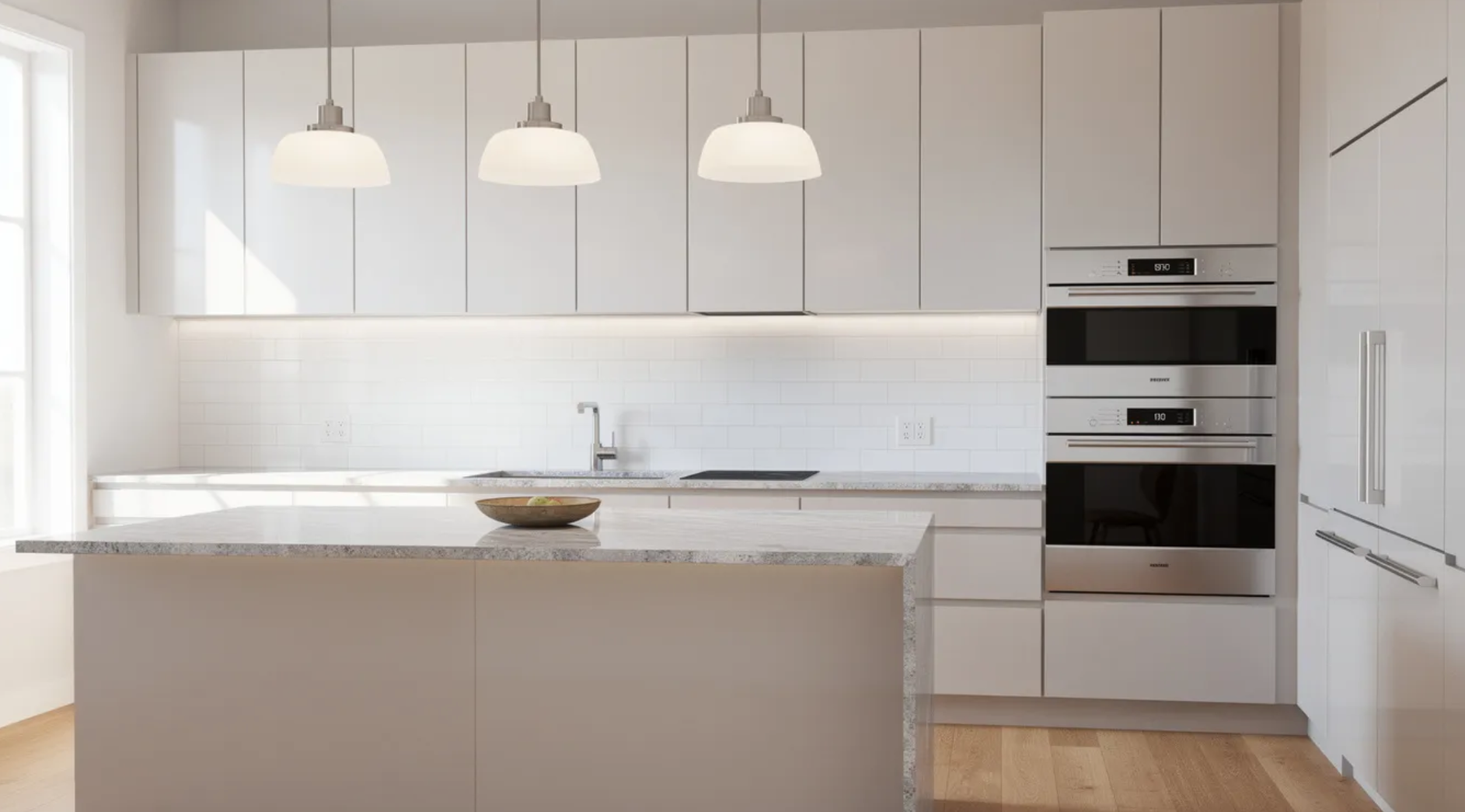
Choosing between a freestanding microwave and an integrated microwave comes down to three things: how much worktop space you need to reclaim, what your budget looks like, and how permanent you want the solution to be. Both types heat food in the same way, but how and where they sit in your kitchen makes a real difference to daily life.
Integrated microwaves free up valuable countertop space and create a streamlined kitchen look that works especially well in modern or open plan kitchens. Freestanding or countertop microwaves are cheaper upfront, require no cabinetry work, and suit anyone who rents or expects to move in the near future.
Key Takeaways
-
Small kitchens and full refurbishments tend to benefit most from built in microwaves that tuck away into cabinetry.
-
Busy family kitchens or rented homes often suit freestanding microwaves that can be swapped, moved, or taken with you.
-
Joe Graham & Son Ltd can supply, install, and repair both styles across Bedfordshire, Luton, Dunstable, St Albans, Milton Keynes, and nearby areas.
-
This guide provides expert advice on dimensions, ventilation, costs, and how to combine microwaves with other built in appliances such as a built in oven and fridge freezer to maximise space.
Integrated vs Freestanding Microwave – Why Worktop Space Matters
Picture a typical UK kitchen on a weekday morning. The kettle sits next to the toaster, a chopping board is wedged between the two, and the countertop microwave is hogging the last usable stretch of worktop. There is barely enough room to set down a plate of hot food, let alone prepare a proper meal. It is a scene most of us recognise, and it gets worse the smaller the kitchen.
A freestanding microwave - sometimes called a countertop microwave - is a plug-in appliance that simply sits on the worktop or a shelf. An integrated microwave, also referred to as a built in microwave, slides into dedicated kitchen cabinetry and sits flush with the surrounding units. Both cook food the same way (using water molecules to generate heat), but the way they are installed changes how much usable space you actually have.
So when you want to maximise worktop space, is an integrated microwave always better than a freestanding one? Or does it depend on the kitchen and the budget? That is the question this guide sets out to answer. Written from the perspective of Joe Graham & Son Ltd - a long-established independent appliance retailer and installer serving Luton and surrounding counties - we will walk through pros and cons, real UK costs in 2026, space-planning layouts, and practical safety tips. Before you read on, think honestly about how often you use your microwave and where it currently lives. That context will help every section that follows hit home.
What Is a Freestanding / Countertop Microwave?
A freestanding microwave is a plug-in appliance that simply sits on the worktop or a shelf, with no cabinet housing required. You place it, plug it in, and start cooking. Freestanding microwaves can be placed anywhere on countertops where there is a suitable 13A socket nearby.
Typical UK sizes for freestanding microwave ovens range from around 17 L for a compact solo model suited to one or two people, up to roughly 30 L for a family-sized unit. Common power levels sit between 700 W and 1,000 W - plenty for reheating, defrosting, and everyday cooking. Freestanding models come in a range of finishes including white, stainless steel, black, and modern black glass, so a well-chosen model can look smart alongside a kettle or toaster.
Many countertop microwaves now include combination and grill functions, blurring the lines with built in microwave oven models. These compact cooking appliances can handle grilling cheese on toast or even baking a small cake, which once required a separate oven. Freestanding microwaves are the default in many UK homes because they require no installation - freestanding microwaves have no installation costs - and they are easy to replace and relocate. The trade-off is that they permanently occupy a visible chunk of worktop space.
What Is an Integrated / Built In Microwave?
An integrated microwave is a built in appliance designed to slide into a dedicated cabinet housing or wall unit, sitting flush with the surrounding cabinetry. The terms "integrated microwave" and "built in microwave" are used interchangeably, and these models belong to the wider family of integrated appliances alongside built in ovens, dishwashers, and integrated fridge freezers.
Common installation positions include above a built in oven in a tall housing, in a wall cabinet at eye level, or in a vertical bank of built in appliances. Built in microwaves can be installed at eye level, which improves everyday ergonomics. Integrated microwaves typically occupy 60 cm of cabinet width to match standard kitchen units, while compact integrated microwaves are designed for slim cabinets - some models have heights as low as 362 mm and depths under 40 cm, according to Beko's sizing guidance.
Design details such as handle-less doors, touch controls, and black glass or stainless steel trims help these models match other built in appliances seamlessly. Built in microwaves are popular in modern kitchen designs where a clean, unified look matters. However, integrated microwaves always require proper ventilation gaps and professional installation, which adds to cost but protects the appliance and the cabinetry around it.
How Each Type Affects Your Worktop Space
This section directly answers the core question: which option does more to maximise worktop space in a real kitchen?
A typical 20–25 L countertop microwave is roughly 45–50 cm wide and 35–40 cm deep. Factor in clearance requirements - approximately 10 cm on each side and 20 cm above for safe heat dissipation - and the appliance effectively claims even more territory. In a small 2.4 m galley kitchen in Luton with limited worktop space, that single appliance can swallow close to 0.5 m of your only continuous prep surface.
An integrated microwave can reclaim approximately 50 cm of counter space because it lifts the appliance entirely off the worktop and tucks it into a wall or tall unit. Built in microwaves save countertop space by being installed in cabinets, leaving the entire surface beneath free for food prep, a bread bin, or other appliances. Integrated appliances declutter worktops for more cooking space - a difference you feel every time you unpack the shopping or roll out pastry.
Consider two real scenarios. In a compact galley kitchen with around 2 m of worktop run, removing the countertop microwave could free enough space for a proper chopping area plus a stand mixer. In a larger open plan kitchen in St Albans, the visual benefit matters just as much: a clean worktop makes the whole room feel calmer.
Placing a small freestanding microwave on a shelf can save counter space too - a practical middle ground for renters who cannot commit to full integration. But if every centimetre of worktop matters, a built in model will usually give you a noticeably clearer, less cluttered counter.
Design & Aesthetics: Seamless Integrated Look vs Flexible Placement
Beyond space, many people choose between integrated vs freestanding microwaves based on how their kitchen will look and feel day to day.
An integrated microwave delivers flush lines, matching trims with a built in oven and other integrated appliances, and reduced visual clutter. Built in microwaves create a streamlined kitchen look that is particularly effective in modern, handle-less, or minimalist kitchens. Integrated appliances enhance the minimalist aesthetic of kitchens by hiding everyday technology behind consistent fascia panels.
A freestanding one sitting on the worktop does not have to look bad, though. A shiny stainless or black glass countertop microwave can appear smart when chosen to match nearby appliances like a kettle, toaster, or freestanding fridge freezer. The key is consistency of finish and colour.
In open plan kitchens where the cooking area is always on show, an integrated microwave helps the room feel calmer and more like part of the living area. Built in microwaves can add value to your home too - estate agents regularly cite integrated kitchens as a selling point.
If you are planning a full kitchen refit with new cabinets, worktops, and perhaps a tall housing for built in appliances, consider a built in microwave from the outset for the cleanest kitchen design. Joe Graham & Son Ltd showrooms can demonstrate side by side how an integrated tower - built in oven plus integrated microwave - compares visually with equivalent freestanding microwaves.
Practical Pros and Cons: Integrated vs Freestanding Microwaves
Here is a quick, skimmable rundown of everyday advantages and drawbacks for each type, focusing on real-world use rather than marketing claims. Choosing the right microwave affects kitchen functionality more than most people expect.
Freestanding Microwave Advantages
-
Lower upfront cost - freestanding microwaves typically cost less than built in models
-
No installation needed - freestanding microwaves require only a power outlet for installation
-
Easy to move or replace - simply unplug and carry to a new location
-
Ideal for renters or anyone who might move within a few years
-
Simple to swap if you later change your kitchen layout
-
Freestanding microwaves are cheaper and easier to replace overall
Freestanding Microwave Drawbacks
-
Permanently occupies worktop space, reducing your prep area
-
Visible power leads can hinder aesthetics
-
Can look cluttered or mismatched in design-led or minimalist kitchens
-
Clearance requirements mean the true footprint is larger than the microwave itself
Integrated Microwave Advantages
-
Zero worktop footprint - they help declutter worktops by integrating into cabinets
-
Seamless appearance with other built in appliances
-
Integrated microwaves can be positioned at a more ergonomic height, reducing bending
-
Easier to pair with a built in oven in a tall unit for a "cooking tower" layout
-
Can contribute to higher resale value of the property
Integrated Microwave Drawbacks
-
Higher purchase price than similar-spec freestanding models
-
Extra cost for a trim kit and professional installation
-
More complexity when replacing like for like later on - cabinet dimensions and finishes must match
-
Less flexible if you remodel or move
Weigh these points against how long you expect to stay in the property and whether you are planning any other kitchen upgrades soon.
Space Planning: Choosing the Best Location for Your Microwave
The location of the microwave can be just as important as the type when you are trying to maximise worktop space and keep the kitchen safe to use.
For freestanding / countertop microwaves:
-
Position away from the hob and not blocking corner prep zones.
-
Place near a socket but not dominating the main chopping area.
-
A dedicated microwave shelf or wall bracket can reclaim worktop space without going fully built in - especially useful in rental properties.
-
An "appliance garage" is a creative way to hide a microwave behind a roll-up or fold-back door, keeping it accessible but invisible when not in use.
For integrated microwaves:
-
A popular layout places the built in microwave above a built in oven in a mid-height housing, creating a single cooking tower.
-
Recessing the microwave into tall cabinetry next to an integrated fridge freezer keeps all tall appliances on one wall and leaves long, clear worktops opposite.
-
Aim for around chest to eye level for most users - avoid putting the microwave so high that you have to lift heavy dishes above shoulder height.
Joe Graham & Son Ltd can visit homes in Bedfordshire and nearby areas to measure up and recommend the safest, most space-efficient position before you buy. Their kitchen design and installation service covers exactly this kind of planning.
Installation, Ventilation & Safety Considerations
Microwaves - especially integrated ones - need correct ventilation and electrical provision to remain safe and reliable over their typical 7–10 year lifespan. Ventilation is a critical factor for microwave installation regardless of type.
Freestanding microwaves mainly need adequate clearance (roughly 10 cm at the sides and rear, and about 20 cm above, depending on manufacturer guidance) plus a suitable 13A socket. That is it.
Built in microwaves demand more:
|
Requirement |
Detail |
|
Cabinet aperture |
Must match the model's specified width, height, and depth |
|
Ventilation gaps |
Manufacturer-approved gaps at sides, rear, or top; trim kit vents must remain unblocked |
|
Electrical supply |
Some plug into a hidden socket; others - particularly combination models with convection functions - must be hardwired into a dedicated circuit |
|
Fixing |
Secured with brackets to prevent movement; installed by a qualified professional |
Built in microwaves need professional installation for safety and ventilation. Built in microwaves require proper ventilation to prevent overheating, which can damage internal components, warp cabinetry, and even pose a fire risk. Installation of built in microwaves requires a licensed contractor familiar with current UK electrical regulations. Built in microwaves often require professional installation for safety - this is not a step to skip to save money.
Never box in a basic countertop microwave to "fake" an integrated look without a proper trim kit. Without adequate airflow, the unit will overheat, and warranties will be voided. Joe Graham & Son Ltd offer professional installation and can remove old appliances, ensuring new integrated microwave ovens are safely fitted and correctly vented.
Cost & Value for Money in 2026
Exact prices shift, but in 2026 there is still a clear cost difference between freestanding microwaves and built in models once installation is factored in. Integrated microwaves typically cost more than freestanding models at every comparable spec level.
|
Cost element |
Freestanding |
Integrated / Built In |
|
Appliance price |
£60–£120 (basic solo); £150–£250 (grill/combination) |
£250–£600+ depending on brand, features, and capacity |
|
Trim kit |
N/A |
£50–£200 |
|
Professional installation |
None |
£80–£200+ |
|
Possible cabinetry work |
None |
£100–£200 if aperture adjustments needed |
|
Typical total |
£60–£250 |
£480–£1,000+ |
Installation of built in microwaves adds to overall appliance costs, and built in microwaves are generally more expensive due to installation costs. Freestanding microwaves have no installation costs, so the sticker price is close to the total price.
However, the "value" of an integrated model includes the worktop space saved, the contribution to resale appeal, and long-term satisfaction with a cleaner kitchen layout. If you are already investing in a kitchen refit, the incremental cost of adding a built in microwave is lower than doing it as a standalone project.
If someone is working with a limited budget but wants to claw back some space, starting with a well-chosen mid-size freestanding microwave plus a separate microwave shelf can be a smart compromise - you can save money now and upgrade to built in later. Contact Joe Graham & Son Ltd for up-to-date package prices on supplying and fitting built in appliances; as a local independent retailer, they regularly offer great value compared to big-box competitors.
Combining Microwaves with Other Built In Appliances
You get the biggest space and design gains when you plan the microwave alongside other built in appliances rather than as a last-minute add-on.
The most popular arrangement is the "cooking tower": a built in oven at waist height with an integrated microwave directly above, both in matching black glass or stainless steel. This setup frees the space where a freestanding cooker or solid plate range might otherwise sit, creating more base units and uninterrupted worktop runs.
Another increasingly common layout integrates the microwave on the same tall run as an integrated fridge freezer and built in coffee machine, creating a vertical bank of appliances and leaving long, clear worktops opposite for cooking and prep.
Co-ordinating finishes and handles across built in microwaves, ovens, and other integrated appliances avoids a mismatched look - this is especially important when mixing brands. Where possible, choose appliances from the same manufacturer or at least the same colour family.
See the full cooking range at Joe Graham & Son Ltd for built in ovens and matching microwave ovens to start planning your layout.
How to Decide: A Simple Checklist
This quick checklist helps you conclude whether a freestanding or integrated microwave is the better fit for your kitchen and lifestyle.
-
Are you renting or planning to move within 2–3 years? If yes, a freestanding one makes more sense - you can take it with you.
-
Is your current worktop space actually limiting how you cook? If you regularly run out of prep area, reclaiming that space matters.
-
Are you planning other integrated appliances such as a built in oven or integrated fridge freezer? If so, adding a built in microwave at the same time reduces total installation cost.
-
What is your budget? If it is tight, a quality countertop microwave at a great price can still serve you well for years.
-
How often do you use the microwave? Daily users benefit more from ergonomic, eye level positioning; occasional users may not justify the investment.
If you answer "yes" to frequent moves and "no" to a full kitchen refit, a freestanding countertop microwave is probably the sensible choice. Conversely, if you are planning a new kitchen, struggling for prep space, and already looking at built in appliances, an integrated microwave will likely deliver more long-term value.
Joe Graham & Son Ltd can provide personalised expert advice in-store, over the phone, or during a home visit, using real measurements and photos of your kitchen. Check out their top microwave recommendations on the website for a shortlist of tried-and-tested models.
Prioritise reliability and after-sales support - not just the cheapest sticker price. A microwave you can trust for seven to ten years is worth paying a little more for.
Joe Graham & Son Ltd: Local Expert Help with Freestanding and Integrated Microwaves
Joe Graham & Son Ltd has decades of experience supplying, installing, and repairing both freestanding microwaves and integrated microwave ovens in Bedfordshire and surrounding areas. As a local independent retailer, the focus is on honest kitchen advice that fits the customer's actual kitchen - not just shifting the latest promotion.
The team can help match a new integrated microwave to existing built in appliances, or suggest a high-quality countertop microwave that suits the customer's budget and less space. Available services covered include delivery, installation, removal of old appliances, and access to spare parts and repairs should anything go wrong later on. That kind of ongoing support is something you should expect from a retailer you trust, and it is harder to find from large online-only competitors.
Visit the showroom, call for advice, or browse the online cooking range to start comparing built in and freestanding options today.
FAQ: Freestanding vs Integrated Microwaves
Can I put a freestanding microwave into a cabinet to save space?
You should never enclose a standard countertop microwave tightly in a kitchen cabinet unless the manufacturer specifically allows it and you use a compatible trim kit. Without proper ventilation, the appliance can overheat, damage surrounding cabinetry, and the warranty will almost certainly be voided. Safer alternatives include a purpose-built microwave shelf with open sides and rear, or switching to a true built in microwave designed for enclosed installation. Some freestanding models are sold as "trim-kit capable," but always confirm with the manufacturer before attempting this.
Is there any performance difference between integrated and freestanding microwaves?
At the same wattage and specification, an integrated microwave and a freestanding microwave heat food using the same technology and will perform similarly. Differences in speed or evenness of steaming, defrosting, or cooking are usually down to wattage, cavity design, and features like inverter technology or sensors - not whether the unit is built in or countertop. A 1,000 W freestanding model will reheat dishes just as quickly as a 1,000 W built in model with a comparable cavity.
What size integrated microwave do I need to replace an old one?
Measure the existing cabinet aperture - width, height, and depth - and compare it carefully with the new model's built in dimensions, allowing for the manufacturer's specified ventilation gaps. Which? recommends checking that the new model is at least 1 cm narrower and shorter than the aperture. Take photos and measurements to a retailer such as Joe Graham & Son Ltd, who can recommend a model that will fit without major cabinet modifications.
Can I move an integrated microwave if I remodel my kitchen later?
You can relocate an integrated microwave, but it will usually require new cabinet housing, a revised wall position, and fresh electrical provision. That makes it far less flexible than simply moving a freestanding microwave to a new location on the worktop. Recommend planning likely future layouts when you first commission a new kitchen to protect against expensive repositioning work later. If flexibility is a priority, keep the freestanding option on the table.
Are combination microwaves worth it if I already own a built in oven?
A combination microwave - whether integrated or freestanding - can act as a second oven, offering grilling and convection functions in addition to standard microwave heating. They are a popular choice in busy family kitchens or for people who like to batch cook, as you can roast or bake in the combination microwave while the main built in oven handles the Sunday joint. Just be aware that combination built in units tend to be bulkier (deeper and taller), so check your cabinet dimensions carefully before ordering.
About the Author


Ceramic vs Induction Hob: What's Best Compared to Gas
December 7, 2022

Signs Your Fridge Freezer Isn't Running As It Should
March 15, 2019

History of the Dyson Company
May 30, 2015

Ceramic Hob vs Induction Hob: What Is the Difference?
October 2, 2026

Top Freestanding Washing Machines in Luton for Every Budget
October 2, 2026
Gas vs Electric Cookers: Which Is Best for Your Kitchen Upgrade?
October 2, 2026

What to Expect When Having a New Washing Machine Installed
August 19, 2026

Is an American-Style Fridge Freezer Right for Your Kitchen?
August 19, 2026
