
Ceramic Hob vs Induction Hob: What Is the Difference?

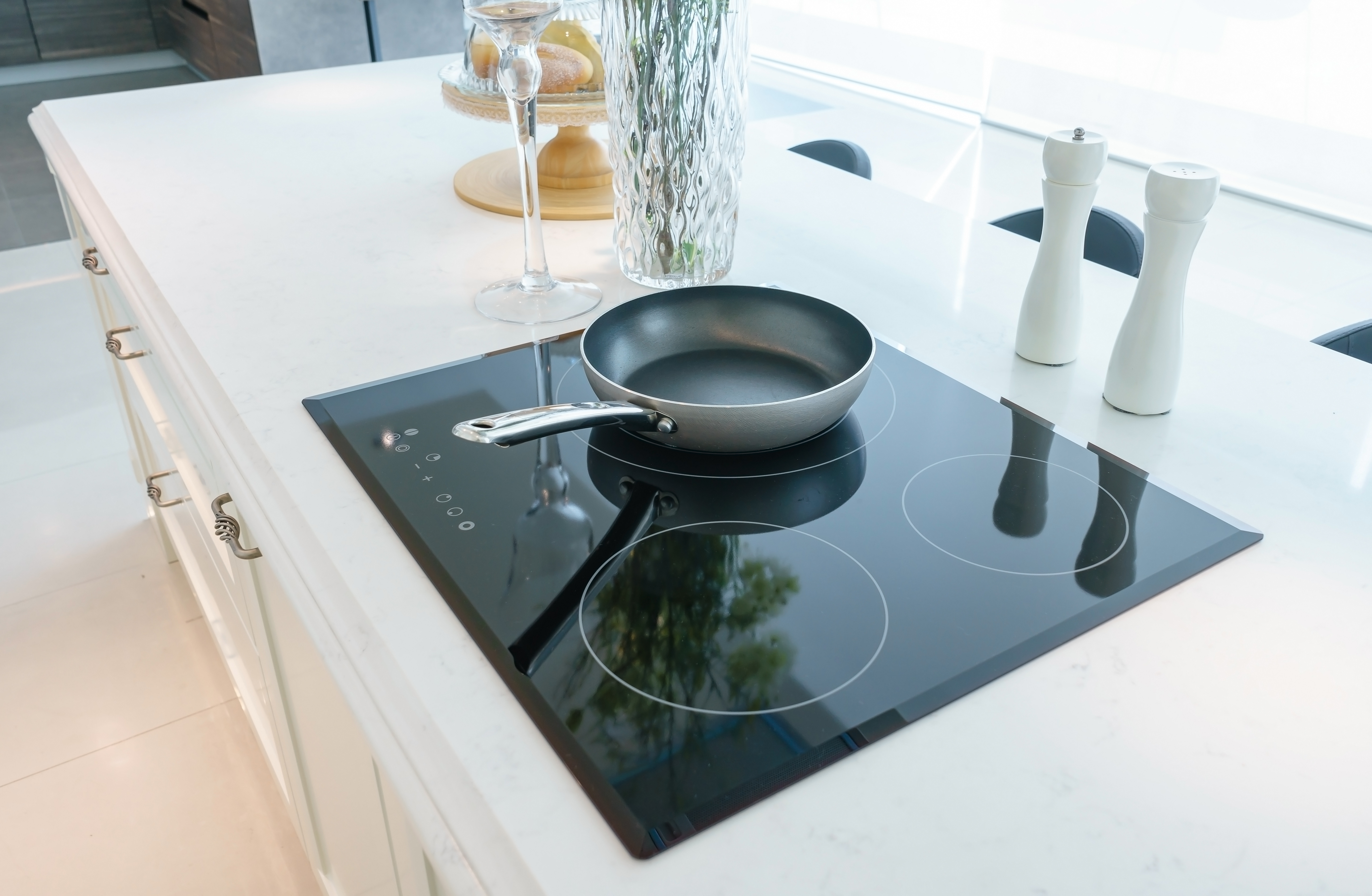
A ceramic hob heats a glass surface from electric elements underneath, then passes that heat to your pan. An induction hob uses a magnetic field to heat the pan itself, so the glass stays far cooler. Induction is faster and more responsive, while ceramic is cheaper to buy and works with every flat-bottomed pan you already own. Both types are in our hob range.
That one difference drives almost everything else: speed, control, safety, cleaning, running costs and the cookware you will need. If you are replacing a hob in your Luton kitchen, or planning a whole new one, this guide covers the details in plain terms so you can choose with confidence.
At Joe Graham & Son we have been helping Bedfordshire households choose appliances since 1966, and hobs are one of the questions we hear most. You can browse our full range of hobs online or see them working in our Luton showroom.
How Does a Ceramic Hob Work?
A ceramic hob is an electric hob with a flat, smooth glass-ceramic top. Underneath the glass sit radiant heating elements. When you switch a zone on, the element glows and heats the glass above it. The glass then heats your pan by direct contact.
This is a simple and proven design. The cooking zones are marked on the glass, and many models offer zones that expand or contract to suit larger or smaller pans.
Because the heat has to travel through the glass first, a ceramic hob is slower to react. Turn the dial down and the glass keeps radiating heat for a while. Turn the zone off and it stays hot, which is why most ceramic hobs show a residual heat light until the surface cools.
If you want to see what is available, our range of ceramic hobs shows the options in one place.
How Does an Induction Hob Work?
An induction hob has a coil of copper wire under each cooking zone. When you switch the zone on, an electric current passes through the coil and creates a fast-changing magnetic field. That field passes through the glass and into the base of a magnetic pan, where it generates heat directly in the metal.
In simple terms, the pan becomes the heat source. The glass is only warmed by the pan sitting on it, so the surface stays much cooler than a ceramic or gas hob.
There are three practical results of this design. The hob reacts almost instantly when you change the setting. It only heats when a suitable pan is in place. And because the glass is not the heat source, the surface is easier to keep clean.
You can compare the models we stock in our induction hobs range.
Ceramic Hob vs Induction Hob: The Quick Comparison
Here is how the two compare at a glance.
-
Heat source: ceramic heats the glass from elements below; induction heats the pan with a magnetic field.
-
Speed: induction is generally faster to bring a pan up to heat.
-
Control: induction responds almost immediately; ceramic lags slightly.
-
Cookware: ceramic takes any flat-based pan; induction needs magnetic cookware.
-
Surface heat: ceramic stays hot for longer after use; induction surface is cooler but still warms from the pan.
-
Purchase price: ceramic hobs are usually the cheaper option to buy.
-
Cleaning: both have a smooth glass top, but spills bake onto a hot ceramic surface more easily.
Now let us look at each of these in more detail.
Cooking Speed and Control
Speed is the headline difference. Because an induction hob heats the pan directly, there is no waiting for a glass surface to warm up first. A pan of water for pasta reaches the boil noticeably sooner than on a ceramic hob, and many cooks find that this changes the rhythm of an evening meal.
Control matters just as much. On induction, turning the heat down reduces the heat in the pan almost at once. That makes it easier to hold a sauce at a gentle simmer, melt chocolate without scorching it, or move from a hard sear to a slow finish.
On a ceramic hob you have to plan ahead. If a pan is about to boil over, lifting it off the zone is often quicker than turning the dial down. Experienced cooks adapt to this easily, and many people are perfectly happy with ceramic for everyday cooking.
If you do a lot of fast, high-heat cooking such as stir-fries, or you like precise low heat for delicate sauces, induction is the stronger choice. If your cooking is mostly kettles, pasta, vegetables and simple one-pan meals, a ceramic hob will serve you well.
Cookware: What Works on Each Hob
This is where the two hobs differ most in day-to-day life.
Ceramic Hob Cookware
A ceramic hob works with almost any pan, as long as the base is flat and clean. Stainless steel, aluminium, copper and cast iron all work. A flat base matters because contact with the glass is what carries the heat, and a warped pan will heat unevenly.
Cast iron and rough-bottomed pans can scratch the glass if you slide them, so lift rather than drag.
Induction Hob Cookware
An induction hob only works with pans that contain magnetic material. The simple test is to hold a fridge magnet against the base of the pan. If it sticks firmly, the pan will work. Cast iron and many stainless steel pans pass this test. Pure aluminium, copper and glass pans do not, unless they have a magnetic layer built into the base.
Many manufacturers now mark suitable cookware with an induction symbol, which looks like a coil. Check your existing pans before you buy. If most of them fail the magnet test, factor in the cost of replacing some of your set when you compare prices.
Safety: Which Hob Is Safer?
Neither hob is unsafe when used sensibly, but they carry different risks.
Surface Temperature
A ceramic hob surface gets very hot and stays hot after you switch off. Most models have a residual heat indicator for this reason. In a house with young children, the hot surface is the main hazard.
On an induction hob, the glass only gets warm from the pan sitting on it. It is still hot enough to burn after a long cook, but it cools much faster, and the hob will not heat at all if there is no suitable pan in place. Many induction models also include a child lock and automatic switch-off if a pan is removed or boils dry.
Pacemakers and Medical Devices
Induction hobs produce a strong electromagnetic field. The British Heart Foundation advises people with a pacemaker to keep a distance of at least 60cm (2ft) between the hob and the pacemaker. It also suggests checking the manufacturer's guidance for your specific model and asking your clinician or pacing clinic if you are unsure. You can read the full advice on the British Heart Foundation website.
If you or someone in your household has an implanted device, ask your clinician or pacing clinic before choosing induction. A ceramic hob does not raise this concern.
Fire Risk
Neither hob has a naked flame. As with any cooking, never leave hot oil unattended, and keep tea towels and packaging away from the hob.
Energy Use and Running Costs
Induction is generally the more efficient way to cook electrically, because the energy goes into the pan rather than into the glass and the air around it. A ceramic hob loses more heat to the surroundings, so more of what you pay for is wasted.
How much that saves you in practice depends on how often you cook, what you cook, and your electricity tariff. We would be wary of anyone quoting a precise annual saving without knowing your household. What we can say is that induction tends to use less energy for the same job, and heats up faster, so pans spend less time on the heat.
Remember that the hob is only part of your cooking costs. Your oven, kettle and microwave all use energy too. Our guide to induction vs ceramic vs gas hobs looks at the wider picture, including gas.
Cleaning and Maintenance
Both hobs have a flat glass surface, which makes them far easier to wipe than a gas hob with pan supports and burners to lift off.
On a ceramic hob the surface becomes hot, so spills can bake on and need extra effort to remove. A ceramic hob scraper, used carefully at a shallow angle, is the usual tool for stubborn marks. Sugar is particularly troublesome, because it can pit the glass if left to burn on. Wipe up sugary spills as soon as it is safe to do so.
On an induction hob, spills tend not to burn on in the same way, because the glass is not the heat source. A damp cloth and a little washing-up liquid usually does the job. Take care with cleaning products that contain abrasives, which can scratch either surface.
Installation and Power Requirements
Both hobs are usually fitted into a cut-out in the worktop, but they can draw quite different amounts of power. Induction hobs often have a higher maximum power rating, and some models need a dedicated circuit. Electrical Safety First says a separate circuit is often needed for a cooker, particularly one over 3kW, or where a new circuit is needed for one over 2kW, and that the work should be done by a qualified electrician. New circuits fall under Part P of the Building Regulations in England and Wales, so choose an electrician registered with a competent person scheme such as NICEIC.
You can read the guidance on the Electrical Safety First website.
Before you order from our full hob selection, check three things: the size of the worktop cut-out, the power rating of the hob, and whether your existing circuit can supply it. If you are swapping like for like, the work may be straightforward. If you are switching from gas, or upgrading to a more powerful induction hob, speak to an electrician early.
Our delivery and installation team can talk you through what is involved when you order.
Noise: Why Does an Induction Hob Hum?
Some people notice a faint buzzing or humming from an induction hob, particularly at high power or with certain pans. It comes from vibration between the pan and the magnetic field, and it is more common with lightweight or multi-layered bases.
It is not a fault. A heavier, well-made flat-based pan is usually quieter. If noise would bother you, bring one of your own pans to the showroom and ask to try it.
Cost: What Should You Expect to Pay?
In general, ceramic hobs are the more affordable choice to buy, and induction hobs cost more for comparable sizes and quality. Prices vary widely by brand and features, so rather than quote figures that may be out of date, we suggest comparing the current prices in our induction hobs and ceramic hobs ranges.
When you weigh up the total cost, include more than the hob itself. Add any new cookware, electrical work and fitting. Then set that against the benefits you will notice every day.
Which Hob Suits Which Household?
Here is a simple way to decide.
Choose a Ceramic Hob If
-
You want the lowest purchase price.
-
Your existing pans are aluminium, copper or other non-magnetic types you want to keep.
-
You cook simply and do not need very fast or very precise control.
-
You are replacing an existing ceramic hob and want a straightforward swap.
Choose an Induction Hob If
-
You value speed and precise temperature control.
-
You want a surface that cools quickly and is easy to wipe clean.
-
You have, or are happy to buy, magnetic cookware.
-
You are designing a new kitchen and want a modern, easy-care finish.
If you cannot decide, it helps to see both working, and you can compare them side by side across our electric and gas hobs. Pop into our Luton showroom, or call us on 0330 900 1966, and we will talk through your cooking habits and your kitchen.
Key Takeaways
-
A ceramic hob heats the glass from elements below; an induction hob heats the pan itself with a magnetic field.
-
Induction is faster, more responsive and generally more efficient, but costs more to buy.
-
Induction needs magnetic cookware. Use a fridge magnet to test your existing pans.
-
People with pacemakers should keep at least 60cm from an induction hob, as advised by the British Heart Foundation.
-
Check your worktop cut-out and electrical supply before you order either type.
Ready to Choose Your Next Hob?
Whichever hob you choose, we can help you find the right fit for your kitchen, and arrange delivery and installation. Browse our hobs, visit the Luton showroom, or call 0330 900 1966 and speak to the team. If you are planning a full refit, take a look at our wider cooking range too.
Frequently Asked Questions
Is an induction hob better than a ceramic hob?
It depends on what you value. Induction is faster, more responsive and generally more efficient, and its surface cools quickly. A ceramic hob costs less to buy and works with any flat-bottomed pan. If you cook often and want precise control, induction is usually the better choice. If you want a low upfront cost and plan to keep your existing pans, ceramic is perfectly sound.
Do induction hobs use less electricity than ceramic hobs?
Generally, yes. An induction hob puts heat straight into the pan, so less energy is lost to the glass and the surrounding air. A ceramic hob heats its surface first, which wastes more. The size of the saving depends on how much you cook and your tariff, so be cautious about any exact figure that does not account for your household.
Can I use my existing pans on an induction hob?
Only if they are magnetic. Hold a fridge magnet to the base of the pan: if it clings firmly, the pan will work. Cast iron and many stainless steel pans pass the test. Pure aluminium, copper and glass pans do not. Many pans carry an induction symbol on the base or packaging, which confirms they are suitable.
Are induction hobs safe for people with pacemakers?
Induction hobs create an electromagnetic field, so the British Heart Foundation advises keeping at least 60cm between the hob and a pacemaker, checking the manufacturer's guidance for your model, and asking your clinician or pacing clinic if you are unsure. Ask them before choosing induction. A ceramic hob does not raise this particular concern.
Which heats up faster, ceramic or induction?
Induction. Because the pan itself is the heat source, there is no wait for a glass surface to warm up first. A pan of water usually reaches the boil sooner on induction than on a ceramic hob. Ceramic is slower to heat and slower to respond when you turn the setting down.
Is a ceramic hob hot after you turn it off?
Yes. The glass keeps radiating heat after the element is switched off, which is why most ceramic hobs show a residual heat warning light. Wait for the light to go out before wiping the surface or placing anything on it. An induction hob also warms from the pan, but its surface cools faster.
Why does my induction hob make a buzzing noise?
A faint hum or buzz is a normal feature of induction cooking. It comes from vibration between the pan base and the magnetic field, and is more common at high power or with lightweight, multi-layered pans. A heavier, flat-based pan is usually quieter. If the noise is loud or comes from the hob when no pan is on it, contact the supplier or a repair engineer.
Do induction hobs need special wiring?
Often they need more power than a basic ceramic hob, and some models need a dedicated circuit. Electrical Safety First says a separate circuit is often needed for a cooker, particularly one over 3kW, or where a new circuit is needed for one over 2kW, and that the work should be done by a qualified electrician. New circuits fall under Part P of the Building Regulations in England and Wales, so choose an electrician registered with a competent person scheme such as NICEIC. Check the hob's power rating and speak to a registered electrician before you order.
Are ceramic or induction hobs easier to clean?
Both are easier to clean than gas hobs. Induction is usually the easiest, because spills do not bake onto a surface that is not itself the heat source. On a ceramic hob, spills can burn on, and sugar can pit the glass if left. Wipe spills promptly and use a hob scraper carefully for stubborn marks.
How long does a ceramic or induction hob last?
Lifespan depends on the brand, how often you cook and how well you look after the surface. Both types are designed for many years of daily use, and the glass top is the part most likely to show wear, mainly from scratches and impacts. Check the guarantee length when you buy, and for repair or spares enquiries, our spares and repairs team can help.
About the Author

Ceramic vs Induction Hob: What's Best Compared to Gas
December 7, 2022

Signs Your Fridge Freezer Isn't Running As It Should
March 15, 2019
History of the Dyson Company
May 30, 2015


Ceramic Hob vs Induction Hob: What Is the Difference?
October 2, 2026

Top Freestanding Washing Machines in Luton for Every Budget
October 2, 2026
Gas vs Electric Cookers: Which Is Best for Your Kitchen Upgrade?
October 2, 2026

What to Expect When Having a New Washing Machine Installed
August 19, 2026

Is an American-Style Fridge Freezer Right for Your Kitchen?
August 19, 2026
