
American Style vs Standard Fridge Freezers: Which Suits Your Home?

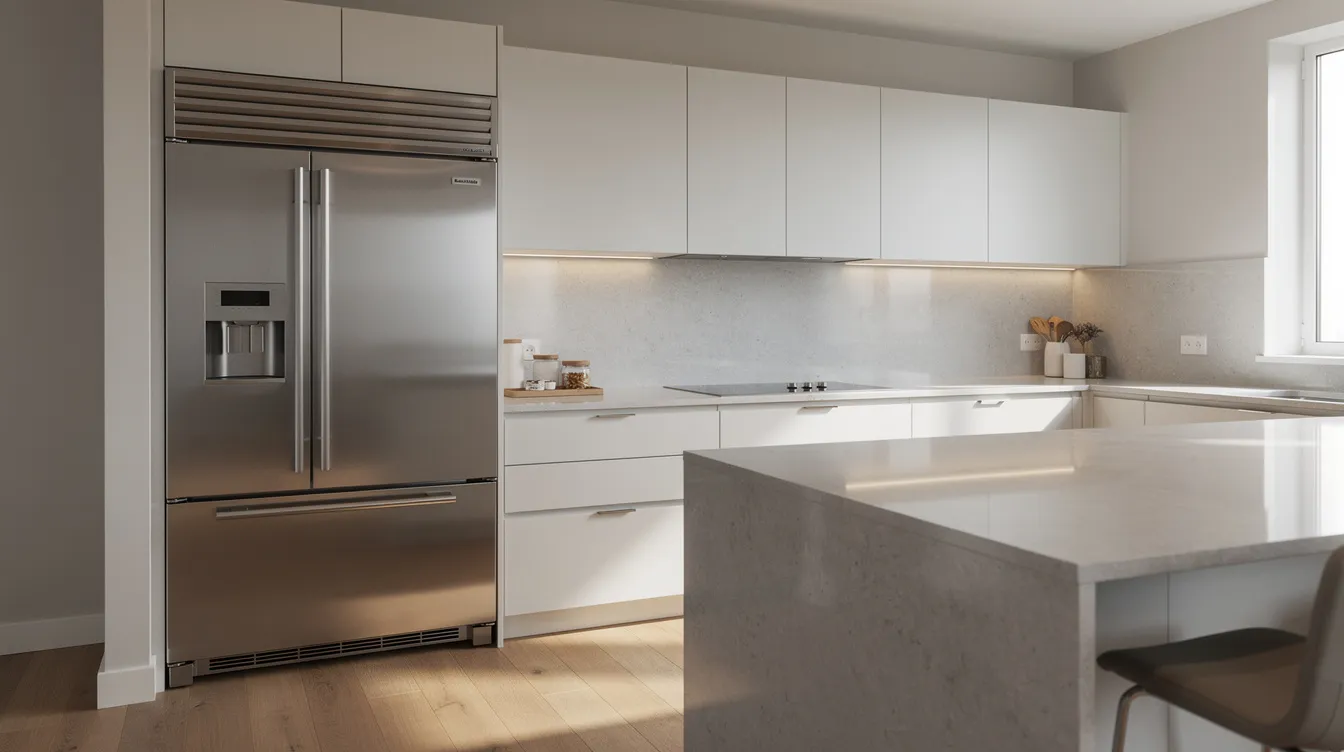
Choosing between an american style fridge freezer and a standard fridge freezer is one of the biggest decisions you will make when fitting out or upgrading a kitchen. The right choice depends on your kitchen space, household size, budget and daily habits rather than on brand marketing alone. This guide breaks down everything you need to know so you can pick the right style of fridge freezer for your home.
Key Takeaways
-
American style fridge freezers (including side by side and french doors configurations) typically offer 500–650L+ capacity, suit larger kitchens and big households, and come packed with advanced features like a water or ice dispenser, frost free technology and humidity control.
-
A standard fridge freezer usually ranges from 200–400L, fits into a 60cm gap, and suits smaller kitchens, couples and average-sized families at a lower purchase price and running cost.
-
Kitchen space, doorway widths and delivery access in typical homes around Luton, Dunstable, St Albans and Milton Keynes often decide the choice more than features or brand alone.
-
Running costs, noise and energy rating can be noticeably higher on large american style models, so checking the energy label and thinking about usage habits really matters for long-term energy bills.
-
Joe Graham & Son Ltd can help measure up, advise on the right model (including integrated models), and handle delivery, installation and removal of old appliances locally.
American Style vs Standard Fridge Freezers: Quick Comparison
If you are short on time, here is the essential difference. An american fridge freezer is a wide, feature-rich refrigeration unit designed for households that need more space and want additional features. A standard fridge freezer is narrower, simpler and built to slot into the 60cm gap found in most UK kitchens.
An american style fridge freezer is typically 70–90cm wide and around 170–180cm tall, with separate doors for the fridge and freezer compartments. It is usually frost free, often includes a water dispenser or ice dispenser, and delivers net capacities in the region of 500–650L. Side by side fridge freezer layouts and french doors models are the two most common configurations.
A standard fridge freezer is usually 55–60cm wide, 130–200cm tall, with a single door for the fridge compartment and one for the freezer compartment. Capacities sit between 200–350L for most freestanding fridge freezers, with 50/50, 60/40 or 70/30 fridge-to-freezer splits.
The biggest decision factors are kitchen layout, household size (single person, couple or large family), total budget including running costs, and whether you prioritise style or day-to-day practicality. For example, a couple in a flat may be perfectly served by a 60cm 70/30 freestanding model offering around 300L, while a family of five doing bulk weekly shops will get far more from a 90cm american style side-by-side with 600L+ of storage space. Joe Graham & Son Ltd regularly helps customers across Bedfordshire upgrade from a standard 60cm unit to a wider american fridge freezer when they are renovating their kitchen.
Kitchen Space and Layout: Will It Actually Fit?
Before you even start comparing brands or key features, you need to know whether a particular model will physically fit your kitchen and get through the front door. Kitchen space and access are the first filter for most buyers.
Standard fridge freezers occupy a 55–60cm wide footprint, which slots neatly into most UK kitchen cabinetry. American style models need 70–90cm+ of width and are often deeper too, at 70–76cm compared with the standard 60cm kitchen unit depth. That extra depth means an american fridge can protrude beyond surrounding cabinets unless there is a recess or enough space at the end of a run. In a smaller kitchen or galley layout, this may be a dealbreaker. If you are working with tight dimensions, our guide to the best fridge freezers for small kitchens is worth reading.
When measuring, allow for doors to open at least 90 degrees, leave a 5cm ventilation gap around the sides and back for proper ventilation, and check headroom under any overhead cabinets. Then measure the access route: common UK internal doorways are only 72–78cm wide, which means a 91cm-wide american style model simply will not pass through without removing the fridge doors or the house doors.
Consider a semi-detached home in Luton with a narrow hallway. A 91cm-wide model may be ruled out, but a slimmer 70cm american style or a standard 60cm fridge freezer could work perfectly. Joe Graham & Son Ltd can pre-check your access route and advise whether handles or doors need to be temporarily removed on delivery day.
Capacity and Storage: How Much Space Does Your Household Need?
Capacity in litres and internal layout matter more than external size alone, especially if you are feeding a large family or doing batch cooking.
Standard fridge freezers typically offer 200–350L of net storage space. A tall 60cm model with a 70/30 split might give you around 200L of fridge space and 100L of freezer, which suits couples and small families comfortably. American style fridge freezers jump to 450–650L+, with some premium models exceeding 650L. That ample space makes a real difference for households doing one big weekly shop or storing fresh food in bulk.
Common splits on standard models-50/50, 60/40, 70/30-let you choose between more fridge space or a larger freezer compartment depending on how much frozen food you keep. American style models often have a side by side split or a french doors fridge above a lower freezer drawer, with flexible zones and sometimes convertible sections that switch between fridge and freezer mode for seasonal cooks or entertainers.
A family of four in St Albans doing one weekly shop typically benefits from at least 350–400L, while a couple who eat out often may be fine with 250L. Look for wide fridge shelves that accommodate platters and pizza boxes, deep door balconies for bottles and drinks, and separate salad crispers that keep vegetables fresh for longer. These organisational details differ noticeably between american and standard designs, and they affect how much usable room you actually get from the stated capacity.
Design and Door Style: Side by Side, French Doors, or Classic?
Door configuration affects daily convenience more than you might expect, especially if your kitchen has tight walkways or you have young children opening the fridge door regularly.
A side by side fridge freezer has two full-height separate doors-fridge on one side, freezer on the other. This gives easy access to frozen food at eye level but can mean narrower fridge shelves that struggle with wide platters. French door american style models pair two narrower fridge doors on top with a lower freezer drawer, which is excellent for wide items and has become a focal point in modern open plan kitchens. Some brands offer a four door layout with an additional middle drawer that acts as a flexible zone.
Standard fridge freezers come in top-freezer or bottom-freezer layouts. Having the fridge compartment at eye level (bottom-freezer design) is usually more convenient for everyday use, while a top-freezer model puts frozen food within easy reach if you cook from frozen regularly. For those with back or mobility issues, a bottom-freezer design avoids constant bending.
An integrated fridge freezer hides behind cabinet doors for a streamlined look and is worth considering if seamless kitchen cabinetry matters to you. Some homeowners opt for an integrated fridge in the main kitchen and a separate freestanding freezer in a utility room for overflow.
Visually, a stainless steel american style model makes a statement in a new-build kitchen, while a white 60cm standard fridge freezer blends quietly into a smaller rental kitchen without drawing attention.
Key Features and Technology: Frost Free, Cooling Systems and More
Both american style and standard fridge freezers now share many core technologies, but the higher-end features tend to cluster on larger american style units.
Frost free technology eliminates the need to manually defrost the freezer compartment. Almost every american style fridge freezer is frost free as standard, while some budget standard models still require periodic manual defrosting. If you have ever chipped away at ice buildup, you will appreciate the difference.
Multi-flow or all-around cooling systems circulate cold air evenly across every shelf, reducing temperature fluctuations. Separate cooling circuits (sometimes called "Twin Cooling") prevent fridge and freezer smells from mixing and help maintain the right temperature at the optimum level. Humidity control in dedicated crisper drawers keeps food fresher for longer, which is especially useful for salad leaves and soft fruit.
American style models frequently include a water dispenser or ice dispenser (plumbed or via an internal tank for chilled water), fast-freeze modes, holiday mode for energy saving when you are away, and door open alarms. Standard fridge freezers focus on practical touches like adjustable shelves, bottle balconies, reversible doors and straightforward digital thermostats.
Joe Graham & Son Ltd can talk you through which key features are genuinely worth paying for in everyday use versus nice-to-have extras that push up the budget without adding much real value.
Energy Efficiency, Running Costs and Noise
Since March 2021, UK fridge freezers carry the revised A–G energy label, which is stricter than the old A+++ system. Looking beyond the letter grade matters, because a large american style model rated E may use far more electricity in absolute terms than a smaller standard unit with the same rating.
Larger volumes of cold air simply require more energy to maintain. A typical standard fridge freezer uses around 250–280 kWh per year, costing roughly £62–£70 on your electricity bill at current rates. American style models commonly consume 350–550 kWh per year, translating to approximately £86–£136 annually. Features like through-the-door ice makers and anti-sweat heaters add to energy usage. For a deeper look at labels and energy saving features, see our energy ratings explained guide.
Noise is another consideration. Modern fridge freezers generally sit between 35 and 45 dB. Larger compressors on american style models can push towards the higher end of that range, which matters if your fridge is in an open-plan kitchen-diner. Models marketed at under 40 dB are a sensible target for shared living spaces.
Simple habits reduce both running costs and noise impact: set the fridge to 3–5°C and the freezer to −18°C for the optimum temperature, avoid blocking internal vents, leave clearance around the cabinet for airflow, and keep door seals clean and intact.
Installation, Plumbing and Integration Considerations
Many american style fridge freezers need more planning for installation than a standard freestanding unit. Getting this right protects your warranty and energy efficiency.
If you choose a model with a plumbed water or ice dispenser, you will need a cold-water supply within roughly 1.5 metres and an inline filter. Professional fitting is recommended. Non-plumbed models use a refillable internal tank, which is more flexible for positioning but means refilling every few days.
Standard freestanding fridge freezer installation is straightforward: level the feet, reverse the doors if needed, and ensure enough space around the unit for proper ventilation. Integrated models need to sit inside 60cm cabinetry with aligned door furniture and adequate airflow in the housing, which is where professional fitting from a service like Joe Graham & Son Ltd's delivery and installation team makes a real difference.
A typical local scenario: Joe Graham & Son Ltd delivering an american style fridge freezer to a Dunstable property, temporarily removing an internal door to get the appliance through, plumbing in the water feed, and taking away the old unit for recycling-all in one visit. Checking staircases, lifts and tight corners in advance avoids surprises on the day.
Budget, Value and Lifespan
Upfront cost is only part of the picture. A compact standard fridge freezer can start well under £400, while a tall mid-range 60cm model typically sits in the £400–£700 bracket. American style fridge freezers begin higher and climb steeply with additional features like smart connectivity or a four door layout, often ranging from £800 to well over £1,500 for premium brands.
Long-term value comes from build quality, energy efficiency and repairability. A well-made fridge freezer should last 10–15 years. Over that period, the difference in running costs between a standard and american style unit can add up to several hundred pounds. Choosing a new appliance with a strong energy rating and a brand known for parts availability helps protect your significant investment.
Access to genuine spare parts and local engineers makes a measurable difference. Joe Graham & Son Ltd's spares and repairs service can extend the useful life of a good fridge freezer well beyond the basic warranty, whether it is a compressor issue on a standard model or an ice maker fault on an american fridge.
Balance the showpiece appeal of a big american style appliance with realistic usage, your kitchen space and the total cost of ownership over a decade. Sometimes a slightly smaller, more efficient model is the smarter buy.
Which Option Suits Different Types of Home?
There is no one-size-fits-all answer, but matching the appliance to your home and household makes the decision far simpler. Here is how typical scenarios play out for customers around Luton and the surrounding counties.
If you live in a small flat or terraced house with a compact kitchen, a standard 55–60cm fridge freezer or an integrated fridge is usually the practical choice. Where you need more freezer room, a separate chest freezer in a utility room can supplement without crowding the kitchen.
A growing family in a three-bedroom semi often benefits from a tall 60cm 70/30 fridge freezer, or a slimmer american style model around 70–80cm wide if the kitchen layout allows. This gives enough space for weekly shops without overwhelming the room.
For a large family or multi-generational household, a full-width american style fridge freezer with 500L+ capacity and french doors is hard to beat. The extra fridge space and larger freezer compartment handle bulk buying and batch cooking with ease.
Keen entertainers or seasonal batch cooks should prioritise flexible storage zones and convertible compartments over sheer footprint. Some american style models let you switch sections between fridge and freezer modes, which is ideal around the holidays.
If you are considering placing a fridge freezer in a garage or outbuilding, check the climate class. Not all large appliances are designed for unheated spaces, and UK winter temperatures can cause standard thermostat-controlled units to stop cycling correctly. Models rated SN or those with dedicated "Freezer Guard" technology are designed for colder environments.
Joe Graham & Son Ltd staff can walk you through these scenarios in-store or over the phone. Browse the full refrigeration range online to get a feel for what is available before your visit.
How Joe Graham & Son Ltd Can Help You Choose
Joe Graham & Son Ltd is an independent, long-established retailer serving Luton, Dunstable, St Albans, Milton Keynes and the surrounding counties. The team offers in-store advice from knowledgeable staff, measuring and suitability checks, guidance on energy labels, and honest comparisons between american style fridge freezers and standard models based on your real usage.
Practical services include local delivery, professional installation (including plumbing when required), removal and recycling of old appliances, and after-sales repair using genuine spare parts. Because Joe Graham & Son Ltd is not tied to a single brand, recommendations are based on reliability, value and suitability rather than promotional targets.
To make the most of a consultation, bring rough measurements of your kitchen space, a photo of the installation area, and an idea of your household size and cooking habits. You can also browse the extensive range online before visiting.
Ready to decide? Get in touch or visit the showroom to see american style fridge freezers and standard fridge freezers side by side before making your choice.
FAQ: American Style vs Standard Fridge Freezers
These frequently asked questions cover practical concerns that often come up once you have narrowed down your choice. If your specific question is not answered here, contact Joe Graham & Son Ltd directly for personalised advice.
Do American style fridge freezers always need plumbing in?
No. Many american style models use a refillable internal water tank to supply chilled water and ice, so they do not require a plumbed connection at all. Plumbed models give you a constant supply without refilling but need a cold-water feed within about 1.5 metres and an inline filter. Non-plumbed versions are more flexible for positioning and simpler to install. Joe Graham & Son Ltd can advise at the purchase stage which type suits your new fridge layout and can arrange professional plumbing if you go down the plumbed route.
Can I put a fridge freezer in my garage or outbuilding?
It depends on the model's climate class. Most fridge freezers are designed to work in heated rooms between about 16°C and 32°C. If your garage regularly drops close to 0°C in winter, a standard combined fridge and freezer may stop cycling correctly because the ambient temperature is already cold enough to satisfy the fridge thermostat, causing the freezer to warm up and putting frozen food at risk. Look for models rated SN (suitable from +10°C) or those with dedicated garage-rated technology such as Beko's Freezer Guard. Joe Graham & Son Ltd can point you to suitable options and advise on best placement.
How long should a good fridge freezer last?
A well-built modern fridge freezer typically lasts 10–15 years, and sometimes longer with proper care. Lifespan depends on build quality, how often the door is left open, ambient temperature, cleanliness of condenser coils and door seals, and whether minor faults are repaired promptly before they cause bigger problems. If you notice signs your fridge freezer is not running as it should, acting early can save the appliance. Joe Graham & Son Ltd's repair and spare-parts service helps extend the life of both american style and standard fridge freezers well beyond the basic warranty.
Is an integrated fridge freezer better for resale value than a freestanding one?
Integrated fridge freezers can enhance the perceived quality of a fitted kitchen and appeal to buyers looking for a seamless, built-in look-particularly in modern flats and premium kitchens in areas like St Albans or Milton Keynes. However, many buyers are equally happy with a quality freestanding or american style fridge freezer, especially where capacity and storage space are priorities. If you plan to sell within a few years, match local expectations: integrated in a premium fitted kitchen, or a stylish freestanding american style unit in a large open-plan space. Joe Graham & Son Ltd's kitchen design service can help you plan for both aesthetics and practicality.
Are repairs more expensive on American style fridge freezers?
American style fridge freezers can be more complex than other models, sometimes featuring extra electronics, ice makers and multiple cooling circuits, which can make certain repairs more involved. That said, many common issues-faulty fans, thermostat problems, blocked drains-are still cost-effective to fix on relatively young appliances from mainstream brands with good parts availability. Joe Graham & Son Ltd's engineers regularly repair both american style and standard fridge freezers across Bedfordshire and can advise honestly whether a repair or replacement offers better value in each case.
About the Author


Ceramic vs Induction Hob: What's Best Compared to Gas
December 7, 2022

Signs Your Fridge Freezer Isn't Running As It Should
March 15, 2019

History of the Dyson Company
May 30, 2015


Ceramic Hob vs Induction Hob: What Is the Difference?
October 2, 2026

Top Freestanding Washing Machines in Luton for Every Budget
October 2, 2026
Gas vs Electric Cookers: Which Is Best for Your Kitchen Upgrade?
October 2, 2026

What to Expect When Having a New Washing Machine Installed
August 19, 2026

Is an American-Style Fridge Freezer Right for Your Kitchen?
August 19, 2026
